

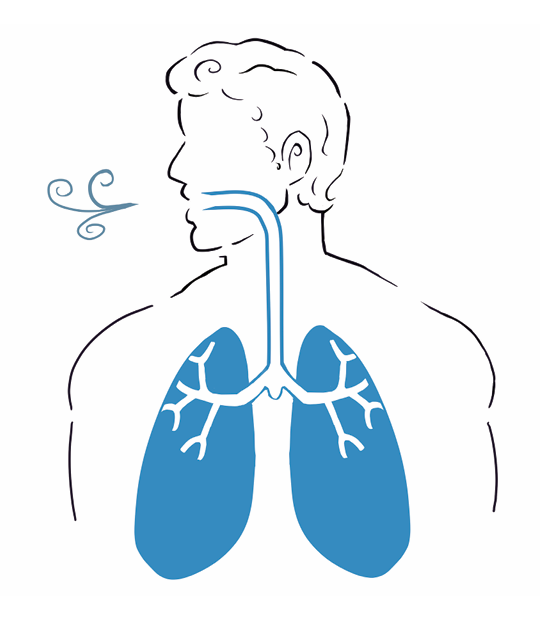
What is lung cancer?
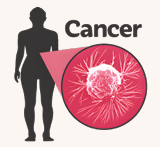
Lung cancer is one of the most common types of cancer.
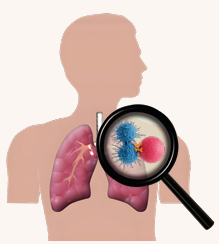
Your body is made of lots of tiny pieces called cells.
One cell might go wrong. This can make other cells go wrong. When this happens in the lungs it can turn into lung cancer.

There are usually no signs or symptoms in the early stages of lung cancer.
This means lots of lung cancers are found late when it is harder to treat.

Finding lung cancer early means treatment can be easier and more successful. The best way to find lung cancer early is through screening.
Screening saves lives.
What is lung cancer screening?
 Lung cancer screening has two parts.
1. Lung health check
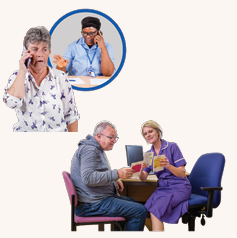
You talk to a health professional one the phone or face to face.
They ask questions to see if you have a bigger risk of lung cancer.
2. Lung scan
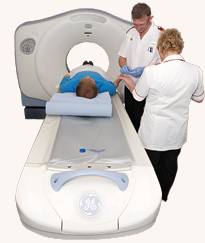
If you have a bigger risk of lung cancer you are offered a lung scan.
A lung scan takes pictures of your lungs.

You can ask a friend or carer for support.
Why are we offering lung cancer screening?
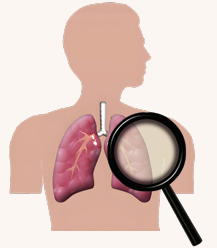
Lung cancer screening helps find problems in your lungs early.
It can help find problems before you notice anything is wrong.

People aged from 55 to 74 who smoke or used to smoke have a bigger risk of lung cancer.
We invite these people for lung cancer screening.

Finding lung cancer early means treatment can be easier and more successful.
Screening saves lives.
1. Lung Health Check
You will talk to a health professional on the phone or face to face.
You talk about:
- Breathing
- How your lungs feel
- Lifestyle
- Family history
- Medical history
After the talk the health professional will tell you what will happen next.
There are 3 possible results.
1. No problems found

The lung heath check found you have a lower risk of lung cancer.
You do not need a lung scan.
You may be invited for another lung health check in the future.
If you notice any changes or have any symptoms before your next lung health check go to your GP (doctor).
2. Offer of a lung scan
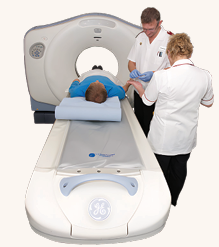
Your lung health check shows you have a bigger risk of problems with your lungs.
You are offered a lung scan to check for signs of lung cancer.
3. Referral to your GP or Local Hospital
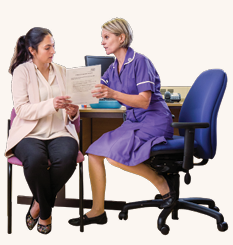
Your lung health check shows some problems but you do not need a lung scan. The health professional will talk to your GP (doctor) or another health professional about your results.
We will tell your GP (doctor) the results of your lung health check.
2. Lung scan
For people invited for a lung scan
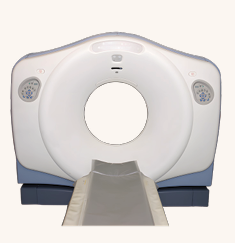
You are invited for a lung scan.
The lung scan is called a low dose CT scan. A CT scan uses a small amount of of radiation.
The scan takes pictures of your lungs.
Radiation is a type of energy.
Radiation is invisible energy that moved through out the air, kind of like light or heat, we can't see it with our eyes.
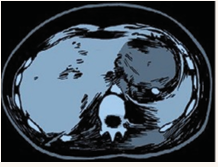
We use radiation to take pictures (x-rays) of the inside of the body.
A lung scan uses a very small amount of radiation. Very small amounts of radiation do not normally cause harm.
Sometimes, if you have too much radiation this can cause harm. This is rare.
What happens at a lung scan?
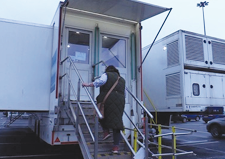
A lung scan happens at a mobile unit or in a hospital.

You are asked to remove any jewellery and clothes with metal zips.
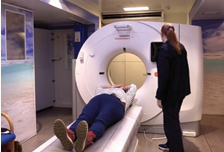
You lie on your back and the bed moves through the scanner.

Staff called radiographers control the scanner from behind a screen.
You can talk to the staff during the scan.
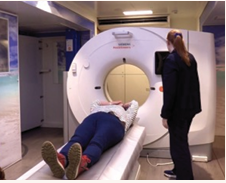
You will be asked to lie still.
You will be asked to breath in slowly and hold your breath for a couple of seconds.
Having a lung scan does not hurt.
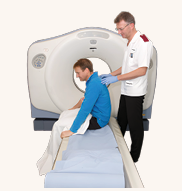
Once the scan is finished you get off the bed and leave the unit.
Lung scan results
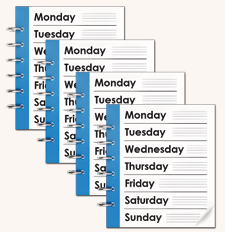
You will get the results of your lung scan within 4 weeks.
There are 4 possible results.
1. No problems found
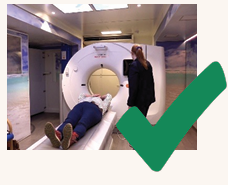
No sign of lung cancer were found on the lung scan.
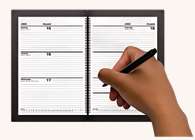
We will invite you for another lung in 2 years to check everything is still OK.
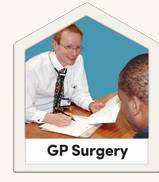
If you notice any changes or have any symptoms before your next scan go to your GP (doctor).
2. You need another scan
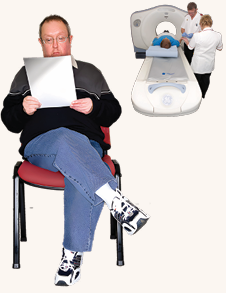
This means we saw something that we want to check again.
We will write to you and ask you to come for another scan.
This is usually in 3 or 12 months time.
3. Further tests needed
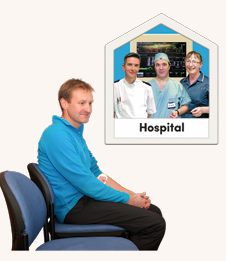
We saw something on the scan and want to do more tests.
We will phone you and write to the hospital.
We want to see you within 2 weeks.
4. Something else found
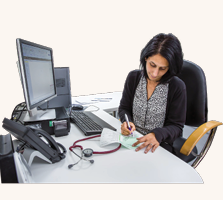
The lung scan looks for lung cancer, but sometimes we find other problems. If we fins another problem we will write to you and your GP (doctor) so you can get more tests or treatment.
Choosing to have lung cancer screening

It is your choice whether you have lung cancer screening.
Having lung cancer screening means we are more likely to find problems early.

Finding lung cancer early means treatment can be easier and more successful.
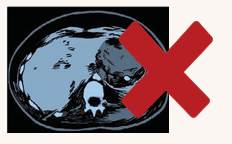
Sometimes the lung scan might miss a lung cancer. This is rare. Sometimes we see something on the lung scan and want to do extra tests. This can be very worrying.

At any time during your lung cancer screening you can ask us any questions.
You can also talk to your GP (doctor) or a health professional at the GP surgery.
Help to stop smoking
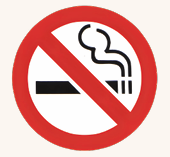
The best thing you can do to make your risk of lung cancer smaller, is to stop smoking.

If you want to stop smoking there are friendly, free, local stop smoking services.
If you want to stop smoking you can:

Ask at your lung cancer screening appointment.
Speak to you doctor.
Contact NHS Smokefree 0300 123 1044
or visit www.nhs.uk/smokefree
Symptoms of lung cancer
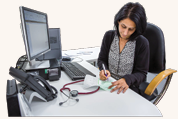
If you have any of these symptoms go to the GP (doctor).
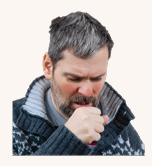
A cough that does not stop
or
Coughing up blood.

Being short of breath
or
An ache or pain when you breathe or cough.

Being very tried or losing weight without trying.

Not wanting to eat anything.
For more information about lung cancer, lung cancer screening and advice on smoking
NHS Lung Cancer Information
www.nhs.uk/conditions/lung-cancer

NHS Smokefree

Cancer Research UK
www.cruk.org/about-cancer/lung-cancer
Roy Castle Lung Cancer Foundation
www.roycastle.org/help-and-support
Made with support from the North East and North Cumbria Learning Disability and Autism Network.
Confidentiality
‘The Trust’s vision is to keep your information safe in our hands.’ We promise to use your information fairly and legally, and in-line with local and national policies. You have a right to understand how your information is used and you can request a copy of the information we hold about you at any time.
For further information on confidentiality contact the Information Governance Team:
Information.Governance@ncic.nhs.uk | 01228 603961
Feedback
We appreciate and encourage feedback, which helps us to improve our services. If you have any comments, compliments or concerns to make about your care, please contact the Patient, Advice & Liaison Service:
pals@ncic.nhs.uk | 01228 814008 or 01946 523818
If you would like to raise a complaint regarding your care, please contact the Complaints Department:
complaints@ncic.nhs.uk | 01228 936302